
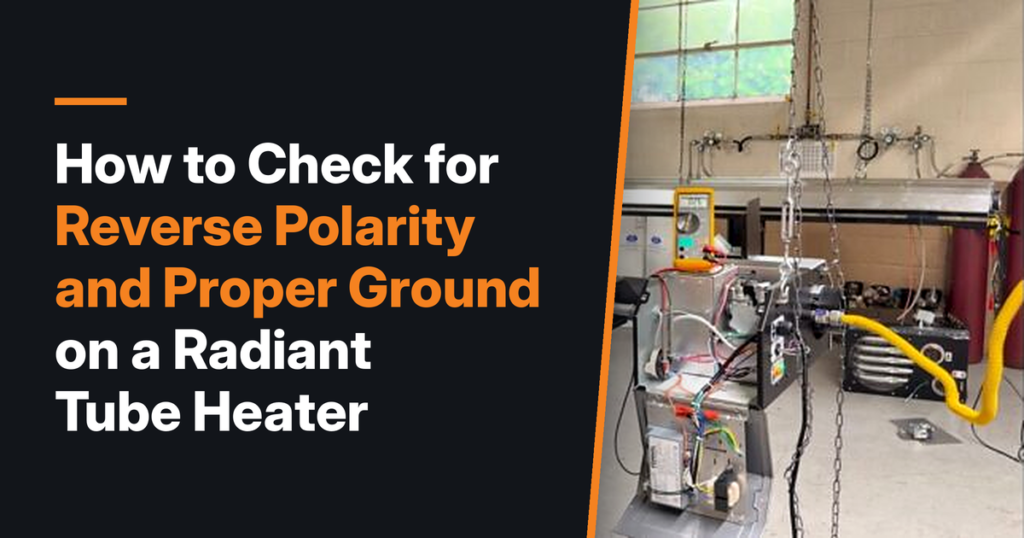
How to Check for Reverse Polarity and Proper Ground on a Radiant Tube Heater
Introduction
If your radiant tube heater has a flame-sensing issue, the flame sensor itself is not the only thing to check. Reverse polarity or an improper ground can also contribute to the problem. Checking the electrical supply helps determine whether either condition needs to be addressed before continuing with flame-sensor troubleshooting.
For the Detroit Radiant Products low-intensity radiant tube heater described here, the polarity check uses a multimeter to compare two voltage readings: hot to ground and neutral to ground.
Safety first: Gas-fired equipment should only be serviced by qualified personnel following the manufacturer’s instructions and local codes. These voltage checks involve energized 120 V wiring and are not a homeowner DIY procedure. Disconnect power before accessing or changing wiring; any required energized testing should be performed with appropriate electrical safety precautions. See OSHA’s electrical safety guidance for supporting information.
Identify the Hot, Neutral, and Ground Wires
The heater’s power cord has three conductors:
- Black: Hot
- White: Neutral
- Green: Equipment ground
These are the three reference points used for the polarity check. The black and white conductors are each measured against ground, then the readings are compared with the expected values for a correctly wired 120 V supply.
Check the Two Polarity Readings
1. Measure Hot to Ground
With the heater connected to its specified 120 V supply, a qualified technician measures AC voltage between the black power-cord connection and the equipment ground.
The expected reading is approximately 120 V. This is the hot-to-ground reading for correct polarity in the demonstrated setup.
2. Measure Neutral to Ground
The second measurement is between the white power-cord connection and the equipment ground.
The expected reading is approximately 0 V. Compare this result with the hot-to-ground measurement rather than interpreting either reading alone.
| Measurement | Expected with correct polarity | Pattern indicating reverse polarity |
|---|---|---|
| Black, hot to ground | Approximately 120 V | Approximately 0 V |
| White, neutral to ground | Approximately 0 V | Approximately 120 V |
What Reversed Readings Mean
If those readings are flipped, the result indicates reverse polarity: the intended hot and neutral connections are reversed in the incoming supply.
That is a supply-wiring problem to have addressed at the receptacle, not a reason to replace the flame sensor. A qualified electrician should correct the wiring and verify the supply before the heater is returned to service.
Verify Proper Grounding Separately
Correct polarity does not eliminate the need to verify the heater’s equipment grounding path. An improper ground is another potential contributor to flame-sensing trouble.
Do not connect neutral to the heater’s equipment ground as a troubleshooting shortcut. Neutral and equipment ground have different functions, and bonding them at the heater can create an unsafe current path. A change in heater operation after altering that connection is not, by itself, a safe or complete grounding test.
Instead, have a qualified technician or electrician verify the grounding path using the manufacturer’s approved procedure. If the ground is defective, the remedy is to restore a proper equipment grounding connection back to the electrical system, including the panel as appropriate, in accordance with local codes. The correct repair depends on the installation; it should not be improvised.
If the Flame-Sensing Issue Continues
Reverse polarity and an improper ground are two possible causes, not a complete diagnosis of every flame-sensing fault. If the supply polarity and grounding have been verified and the problem remains, continue with the manufacturer’s flame-sensing troubleshooting procedure.
Additional radiant heater troubleshooting resources are available on the Great Lakes Radiant YouTube channel.
The key is to check the electrical supply before assuming the flame sensor is at fault. Verify polarity, confirm a proper equipment ground, and use those results to guide the next troubleshooting step.
Need Help Troubleshooting a Radiant Tube Heater?
If your radiant tube heater is experiencing a flame-sensing issue, checking the electrical supply can help identify problems with polarity or grounding before replacing components.
Great Lakes Radiant provides radiant heating equipment, replacement parts, and technical support for contractors and heating professionals.
📞 (888) 501-0252
📧 sales@glradiant.com
🌐 www.glradiant.com